


Making landscape finance accessible, with WWF
The context and the challenge
Protecting nature and growing food are not opposing goals. The challenge has been finding ways to bring them together, with the right investment, the right governance and a clear understanding of how landscapes really work. Landscape finance is that connection: an approach that directs investment into the places where conservation, agriculture and local livelihoods can reinforce each other, so ecosystems and economies grow together.
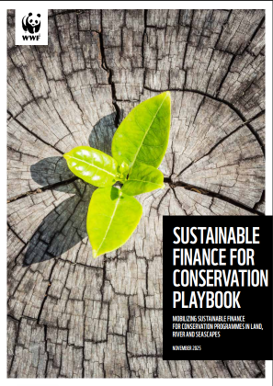
WWF has been developing and advancing this approach for years, working with partners Conservation Capital and the Sustainable Finance Coalition. The result is the Landscape Finance Approach Toolkit: a comprehensive body of resources including a summary guide, a practitioner playbook, real-world case studies and an investor white paper, designed to support governments, civil society organisations, financial institutions and investors in putting the approach into practice.
WWF had already seen the benefits of this approach. Projects were progressing, results were showing, and more people were interested. But to reach its full potential, more professionals needed to understand, use, and share the approach across countries, sectors, and languages.
Just having resources was not enough. The knowledge needed to be easy to learn.
In 2026, WWF commissioned MDF, together with InnovaHub, to meet that challenge: to take that body of knowledge and transform it into a global online learning trajectory, available in English, French and Spanish.
From technical materials to memorable learning
The starting point was a simple question: what helps people retain and apply complex knowledge?
As learning designers and facilitators, it is easy to assume that if something is explained clearly enough, people will understand it. But understanding is not enough. Learners retain stories. They retain the decisions, the dilemmas and the moments when something abstract becomes real.
That insight shaped every design decision. Rather than reproducing WWF's existing materials in digital format, MDF worked with InnovaHub to build a learning experience around storytelling, case studies, guide characters and real dilemmas. Learners do not experience abstract definitions. They encounter decisions and trade-offs that make the underlying concepts concrete and human.
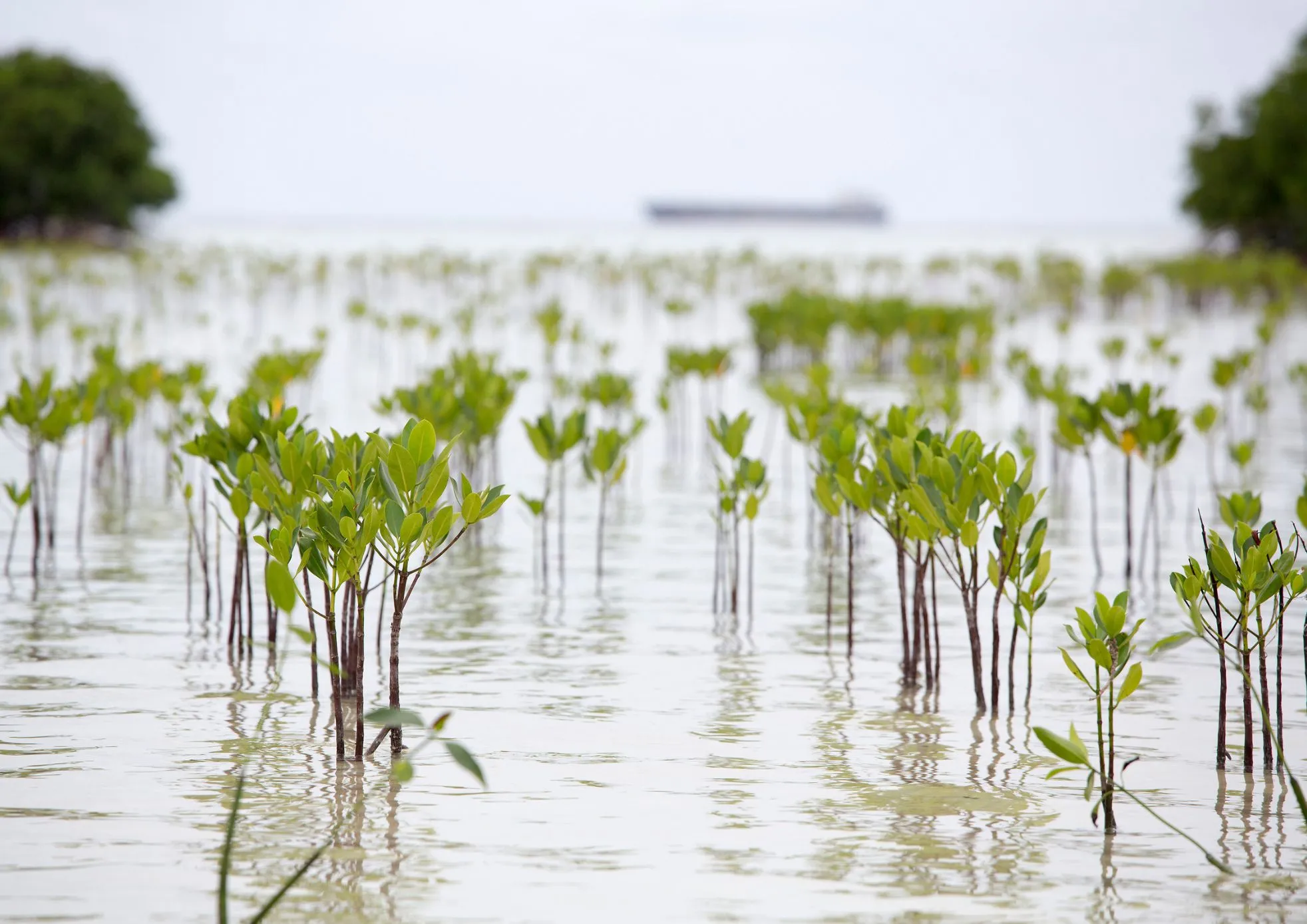
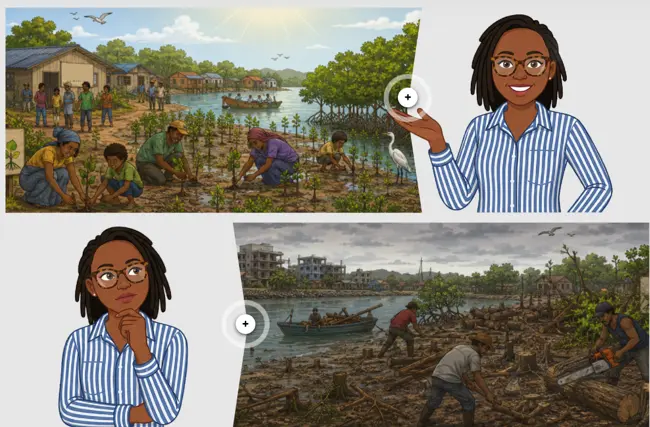
One good example illustrates why the approach is essential. A mangrove restoration project had everything a conventional conservation effort could want: funding secured, trees planted, experts involved. Within a year, villagers began cutting the mangroves again. The project had addressed the visible problem but not the broader system: the poverty, the lack of alternative livelihoods, the competing pressures communities faced every day. It is exactly the kind of situation the landscape finance approach is designed to prevent, by ensuring that conservation plans account for people, incentives and local realities from the start, not as an afterthought.
That principle runs through the full learning trajectory. The programme helps learners understand how landscape finance and nature-positive agriculture are connected: that protecting biodiversity and producing food are not competing goals, but conditions of each other.
The programme includes technical content from WWF's existing materials, presenting it in a way that is easy to understand while keeping its depth.

The Landscape Finance Hub brings together the full learning trajectory, practical tools, case studies and guidance on landscape finance and nature-positive food systems. It is available in English, French and Spanish at landscapefinancehub.org.
Our consultant Maddalena Bearzotti writes about her experience designing this learning trajectory here.


