


From Impact to Communication: Supporting Erasmus+ organisations to make a difference
From understanding impact to communicating for impact
The Erasmus+ programme is the European Union’s flagship initiative supporting education, training, youth and sport. In its current 2021–2027 phase, the programme places strong emphasis on impact, inclusion and the visibility of results.
To support these ambitions, twelve Erasmus+ National Agencies (NAs) – from Portugal, Malta, Romania, Czechia, Slovenia, Finland, Belgium, Austria, Cyprus, Greece, Ireland and the Netherlands – have joined forces in a long-term cooperation activity (LTA) on impact, led by the Dutch National Agency (Nuffic).
Rather than focusing solely on measuring results, the LTA aims to strengthen how Erasmus+ projects are designed, implemented and communicated, helping organisations achieve meaningful and lasting change.
The third phase of the LTA builds on two earlier phases: the first focused on understanding impact, guided by MDF, and the second on monitoring and assessment, guided by Demos Helsinki.
The third and final phase, led by MDF and in partnership with BRANDOUTLOUD, focuses on strengthening the communication and dissemination capacities of small and medium-sized Erasmus+ beneficiary organisations.
At the heart of this phase is the development of a practical and accessible guide to Communication for Impact. The guide draws on a study involving visits and interviews with National Agency staff and beneficiary organisations. It helps organisations look beyond simply sharing project activities and results, and instead consider how communication can encourage others to learn, take action and contribute to lasting change.
This approach recognises communication as an important means of increasing visibility, encouraging the uptake of project results, influencing policy and strengthening long-term impact.
Practical tools and resources
The first and third phases of the LTA have resulted in a range of practical resources for Erasmus+ National Agencies and beneficiary organisations:
1. The Impact Handbook
Developed during the first phase, this handbook supports National Agencies and beneficiary organisations in integrating impact into project design. It explains the concept of impact and provides step-by-step guidance on how to incorporate it into project proposals.
The handbook is available in English and seven other languages. Access the Impact Handbook.
2. The Communication for Impact Guide
This comprehensive guide introduces the concept of Communication for Impact and encourages organisations to take a critical look at their communication strategies.
How can communication help others learn from your experiences, build on your results and contribute to the change you want to achieve?
The guide provides practical guidance and reflection questions to help organisations make their communication more purposeful and effective. It is available as a PDF in English.
3. The Interactive Communication for Impact Guide
A shorter, interactive version of the guide is currently being finalised. It helps Erasmus+ beneficiary organisations work through five essential questions:
- What change do you want to support?
- Who needs to act, use, support or share your results?
- What do they need to know, feel or do?
- What communication action is most useful at this stage of the project?
- How will you know whether your communication is effective?
The interactive format makes it easier for organisations to apply these questions directly to their own projects.
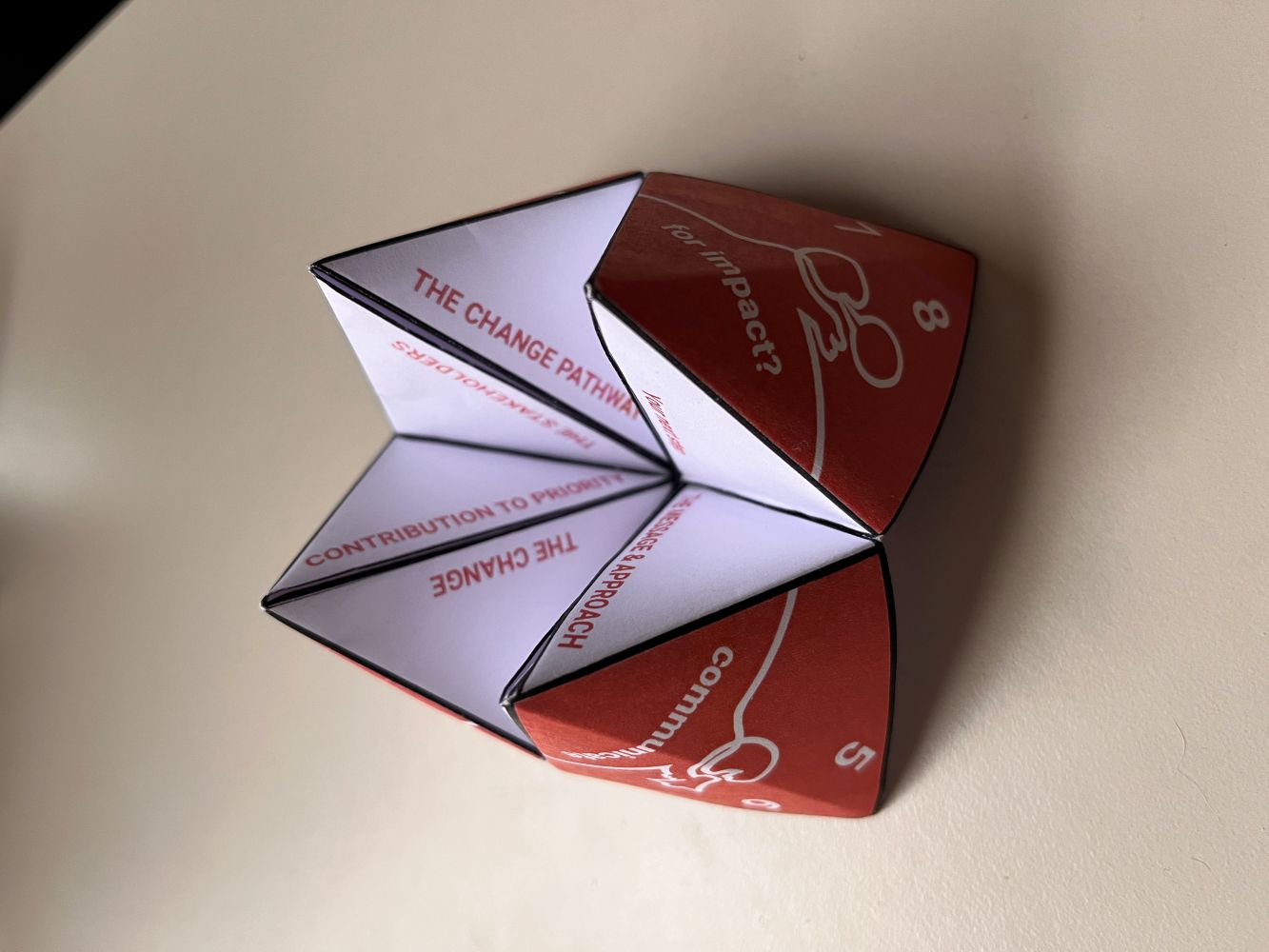
4. The Impact Teller
The Impact Teller is a playful, printable tool designed to spark conversations about Communication for Impact. Inspired by a paper fortune teller, it brings together key questions and ideas from the guides, encouraging colleagues and peers to reflect, exchange perspectives and explore how communication can contribute to change.
5. Training materials for National Agencies
A complete set of training materials enables National Agencies to facilitate their own face-to-face workshops and online webinars on Communication for Impact. The materials include session outlines, presentation slides and practical exercises, available in both editable and ready-to-use formats.
Putting Communication for Impact into practice
The first training on Communication for Impact took place in Romania in October 2026, bringing together National Agency staff and Erasmus+ beneficiary organisations.
The LTA will conclude with a closing event in Antwerp, Belgium, from 23 to 25 November 2026. During this event, MDF will facilitate six interactive sessions on Impact and Communication for Impact for staff from Erasmus+ National Agencies.
For more information contact one of the following trainers: Sam Boering, Rhodé de Graaf, Karin Rozendal.


