


.webp)
Developing a behaviour change toolkit for waste workers in India
The client and the challenge
Each year, thousands of occupational health and safety training sessions take place worldwide. Participants learn about workplace risks, personal protective equipment and safe work procedures. Still, unsafe practices often continue in daily routines.
Informal waste workers in India sit at the centre of that paradox. Every day, they collect, sort and recover recyclable materials that keep cities clean, reduce landfill waste and support a circular economy. However, many work in difficult conditions, including daily risks of injury, health problems, financial insecurity and limited access to health care or social protection.
In 2025, Mondiaal FNV and WASTE commissioned MDF to develop a learning programme that does more than raise awareness. As part of the FINILOOP programme, and working with Trust of People, Hasiru Dala and the Alliance of Indian Waste Pickers (AIW), the goal was to help waste workers make small but meaningful changes to improve their safety, health and financial stability, while building stronger teamwork.
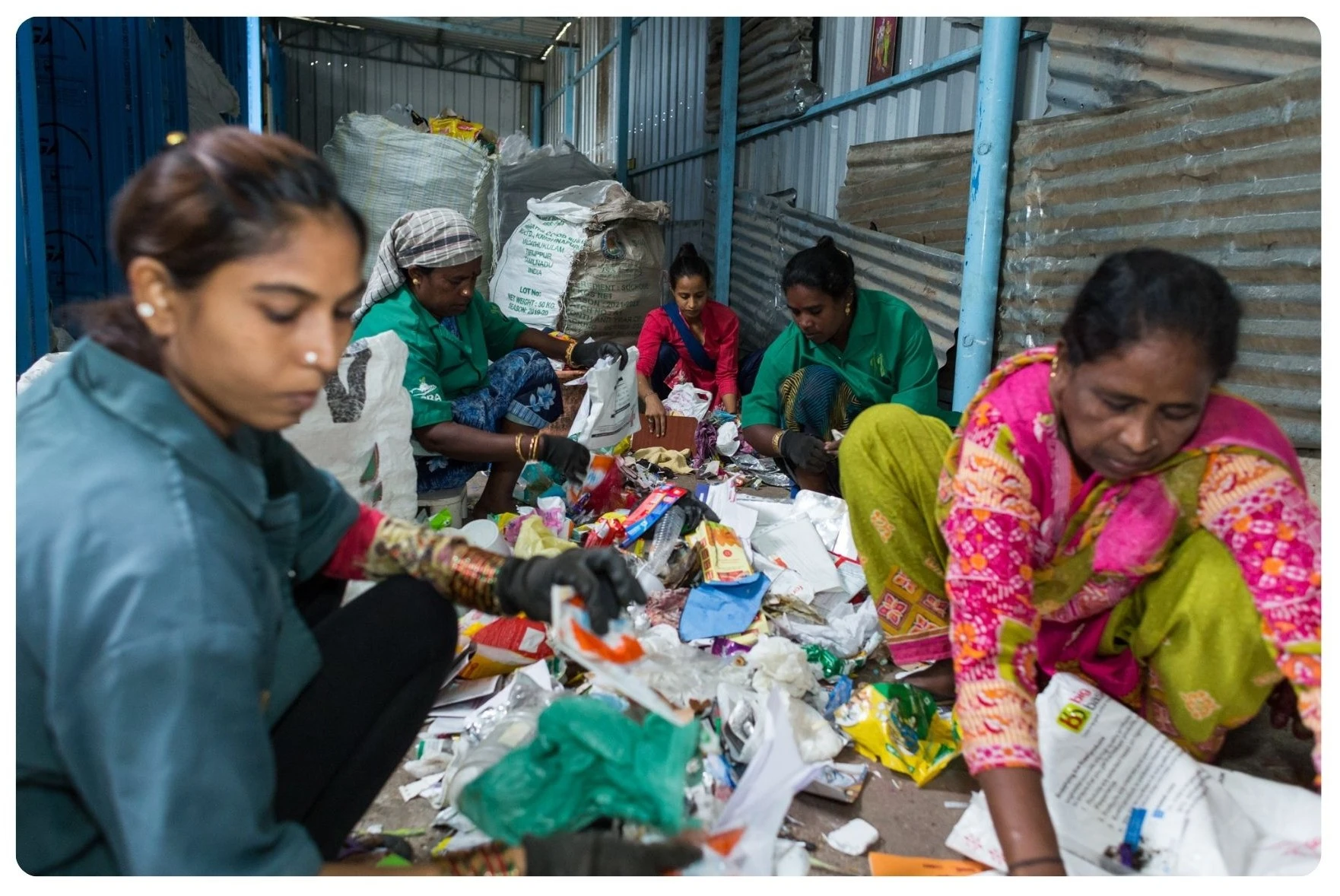
Our approach: Awareness to behaviour change
Rather than developing another toolkit of technical Occupational Safety and Health (OSH) information, the project started with a different question: what helps people actually change what they do every day?
Field visits and in-depth discussions with waste workers and the organisations supporting them in India helped shape the answer. The result is a Behaviour Change Toolkit for Trainers: a detailed manual that guides trainers through each session, using visual aids and clear steps to make the content easy to use. The toolkit is based on the idea that behaviour changes when people are motivated, have the right knowledge and skills, and get the chance to use new habits at work. This approach follows the COM-B Behaviour Change Model.
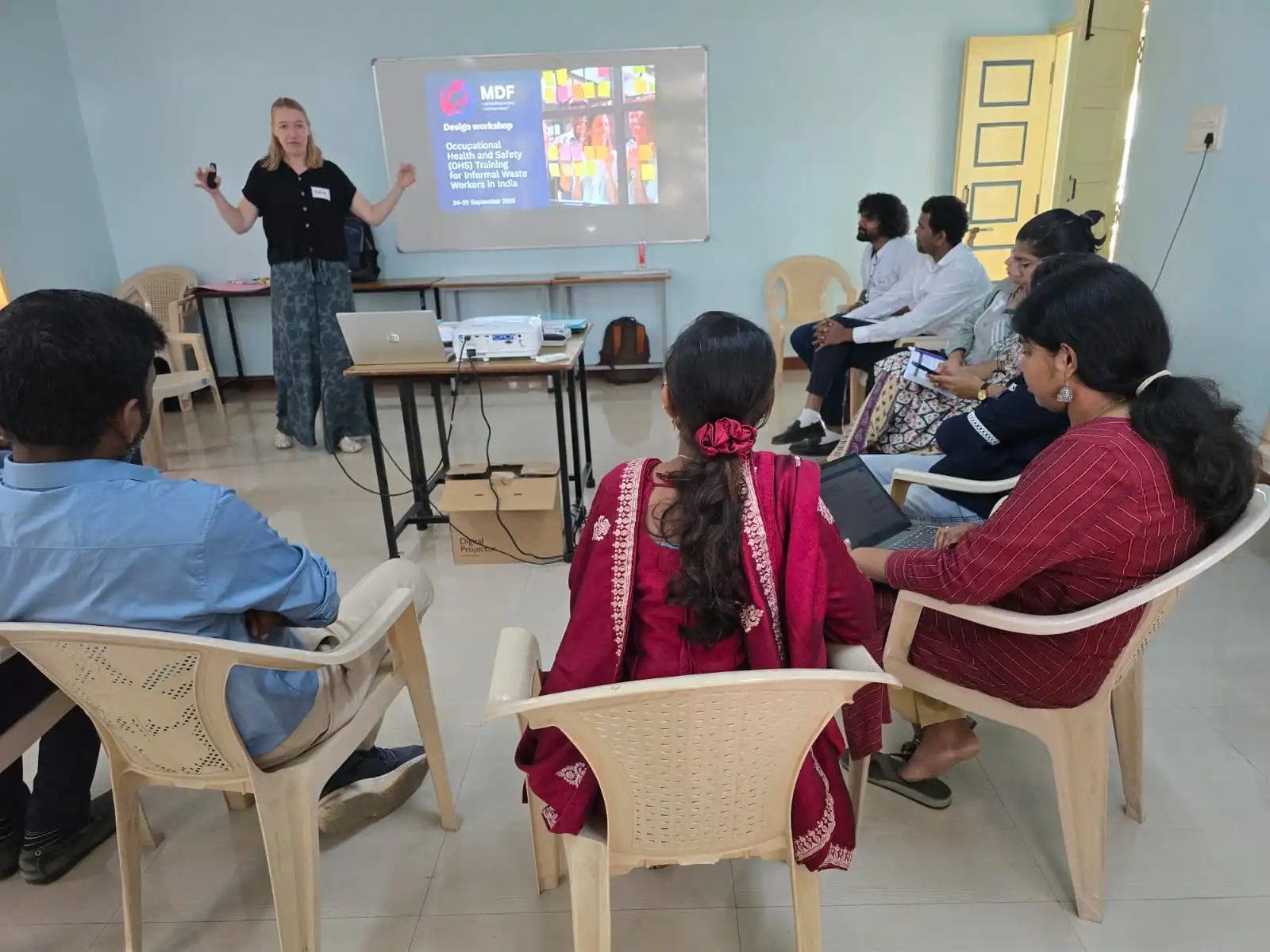
Each session in the toolkit was created with the real-life experiences of informal waste workers in mind. Instead of just using presentations, the programme uses practical and interactive methods like storytelling, role plays, games, observation exercises, reflection and peer learning. The aim is to build real awareness, helping workers see their situation in a new way and feel ready to take action. Between sessions, group leaders record small changes in daily routines with photos and short videos, so trainers can track progress over time.
The toolkit covers topics like recognising workplace risks, working together to improve safety, talking with authorities, being financially prepared, using personal protective equipment and working in ways that protect the body.
Instead of expecting perfect behaviour right away, the programme focuses on small, practical steps people can use in their work: lifting heavy loads together, using PPE more often, discussing risks before starting work, or speaking more confidently to local authorities about health services and safer conditions. These small shifts are the foundation of change that holds.
What comes next
The next step, planned for 2026, is to implement the learning journey with trainers and informal waste worker groups in India and Malawi.
The toolkit is already proving useful beyond its first setting. WASTE tested the Financial Preparedness session with informal waste workers in Malawi, and it was well received, particularly for its game-based approach. The session led to conversations about health, income, savings and preparing for unexpected events, showing how interactive learning can encourage reflection and behaviour change in different places. These early results suggest the toolkit can be adapted for other countries, while staying focused on practical learning and behaviour change.
Small shifts, real change
Sustainable change rarely starts with information alone. People are most likely to change when learning is practical, relevant and connected to their own reality, whether the topic is occupational safety, leadership, organisational development or something else. Sometimes the biggest improvements begin with a very small shift: a different conversation, a safer habit, or a new way of working together. That is what this toolkit was designed to make possible.


