




In an international setting, your newly formed team gathers for the first time. Politeness fills the air, conversations are careful, and behind every word there's a hint of caution.
Someone with a strong D tendency is eager to get going. Someone leaning I is making conversation over coffee. Someone with an S style is quietly scanning the room for a sense of safety. Someone leaning C is already asking about the schedule and expectations.
Most people carry a mix of these tendencies rather than fitting neatly into one. But the patterns are recognisable, and that's what makes DISC useful, not as a label, but as a starting point for noticing what someone might need, especially in a room full of new faces like this one.
This is Forming, the very first stage of Bruce Tuckman's timeless model of group development. And while the theory is over 60 years old, its truth still plays out in meeting rooms, project kick-offs, and virtual team calls every day.
Forming is only the start. Four more stages follow, and each one asks something different of a leader.
Storming comes next, as the early politeness wears off and real differences surface. Team members test boundaries, push back on roles, and disagree openly, sometimes for the first time. It can feel like things are falling apart, but it is often a sign that people are engaging honestly rather than staying safe.
Norming follows, as the team works through those differences and settles into shared ways of working. Roles become clearer, trust builds, and collaboration starts to feel less effortful.
Performing is the stage every leader is working towards. The team operates on trust rather than negotiation, drawing on each member's strengths to move quickly toward shared goals.
Adjourning marks the end of the team's journey, as the project closes and the group disbands. It's easy to treat this as an afterthought, but how a team closes matters. It shapes how ready people feel for whatever comes next.
The real art of leadership is knowing how to move the team forward through all five stages. That is where understanding the DISC personality model changes the game.
Why DISC matters in team development
The DISC model categorises behavioural styles into four main types:
D (Dominance) – direct, results-focused, decisive
I (Influence) – enthusiastic, persuasive, people-oriented
S (Steadiness) – calm, dependable, relationship-focused
C (Conscientiousness) – analytical, detail-oriented, quality-driven
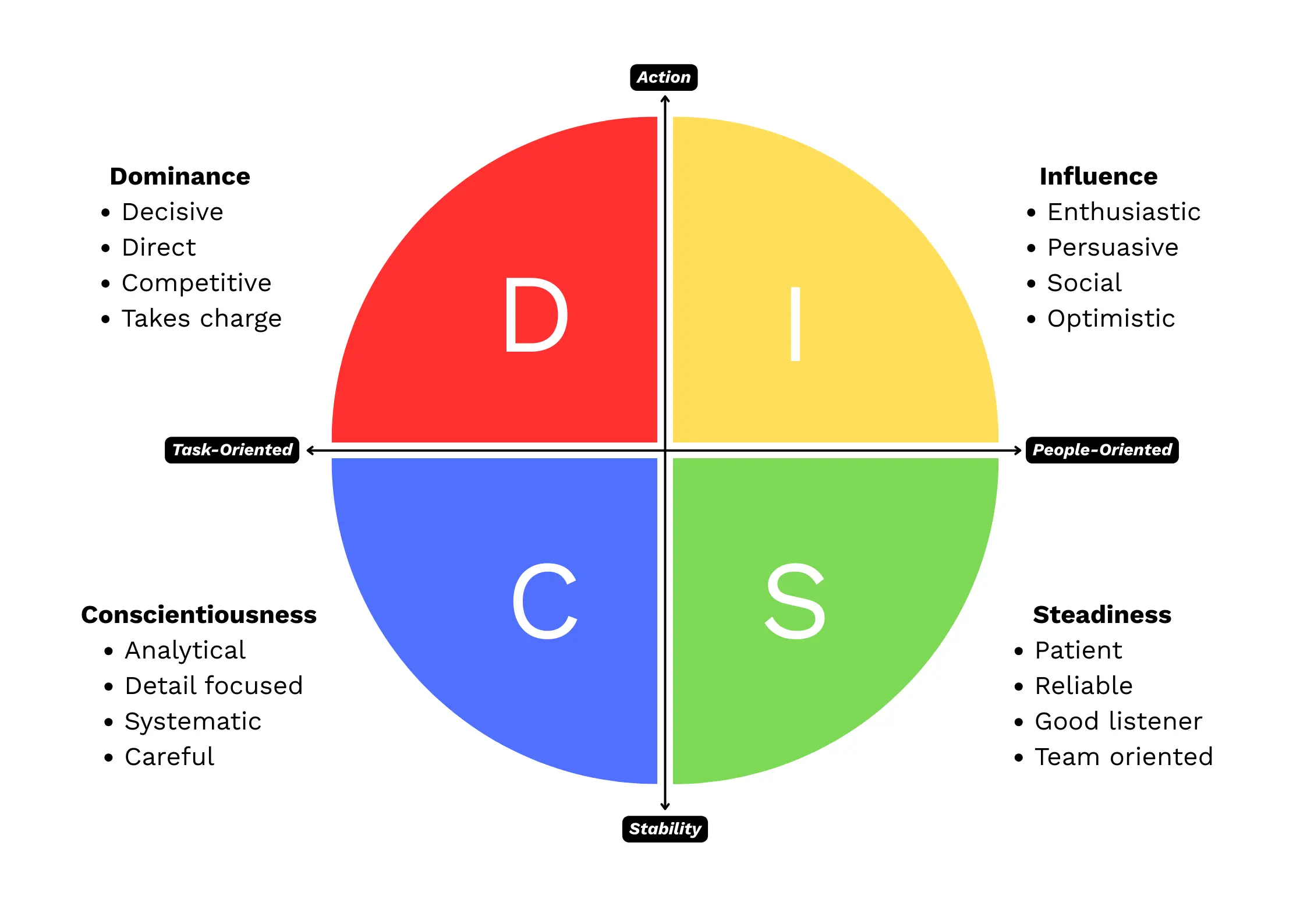
Blend Tuckman’s stages of team development with the DISC model, and you unlock a sharp lens for understanding your team. You’ll see what they need before they ask, adapt how you communicate, and draw out the best in every member—even across cultures in an international setting.
How DISC styles show up in each stage of team development
.webp)
Your leadership in action
By recognising these patterns, you will be able to:
- Anticipate your team’s needs at each stage of development.
- Adapt your communication to suit both the team’s stage and individual styles.
- Spot and prevent biases or exclusion, keeping the team moving forward with ease.
For example, in the Storming stage, a “D” leader might need to slow down to ensure buy-in, while a “C” leader may need to avoid getting stuck in over-analysis. A balanced approach—considering both personalities and stage—ensures stronger results and healthier team dynamics.
From theory to practice
In our Leadership and People Management course, we take this a step further. You will learn how to assess both the group’s needs and individual profiles, and how to adapt your leadership style in real time.
The course combines self-paced online learning with an immersive week on location in the Netherlands – an ideal setting for reflection, hands-on practice, and rich peer exchange within an international group.


