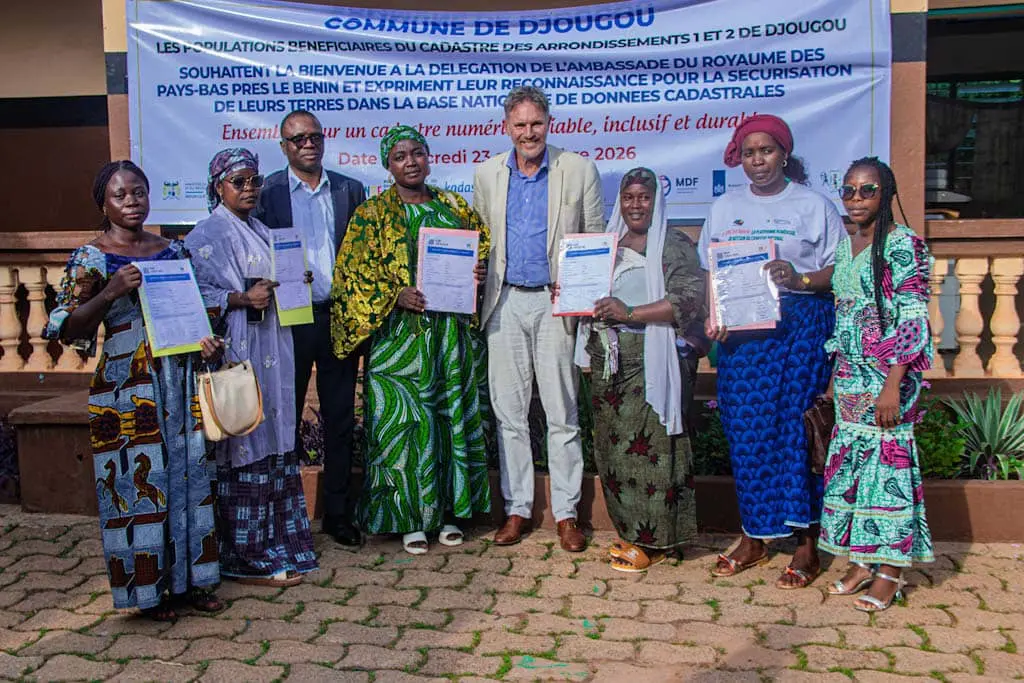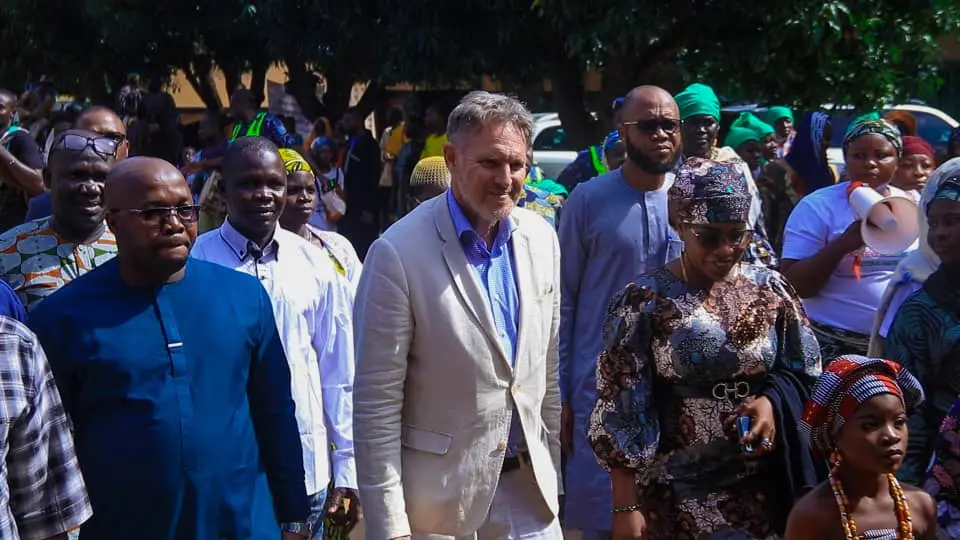

In September 2026, a delegation from the Embassy of the Netherlands in Benin, led by Ambassador Joris Jurriens, made a working visit to Djougou. The delegation was accompanied by Dr Damien N’Ledji Gbedji, Director of MDF Benin and project lead of the Project for Preparing the Scale-up of the National Cadastre (PPMEC).
The aim of the visit was to see how the national cadastre is progressing in the municipality of Djougou, in particular in the districts of Djougou 1 and Djougou 2, where the work has been under way since 2021.
After a short exchange with the two deputy mayors, the delegation joined the council chamber at the town hall. Representatives involved in land management were gathered there, together with several people who have benefited from the cadastre.
The first deputy mayor, Daïratou Salifo, welcomed the delegation and spoke about the land management challenges the municipality faced before the cadastre was introduced.
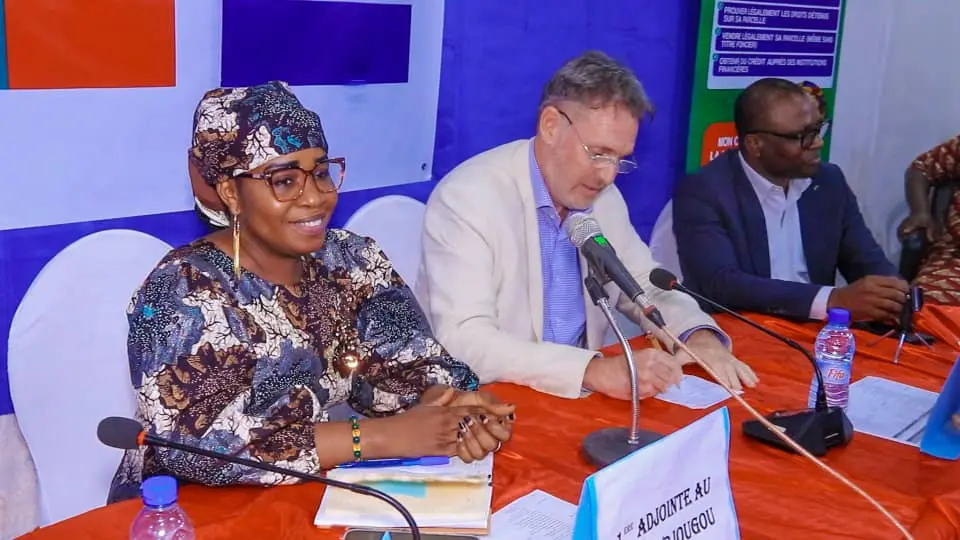
Since 2021, the cadastre in Djougou 1 and Djougou 2 has gradually helped improve the situation. Djostrine Zohou, Director of Land and Environmental Affairs at Djougou town hall, confirmed this progress and presented the main results.
The data show that 10% of parcels belong to women.
More than 7,000 Certificates of Cadastral Registration (CEC) have already been distributed door to door in the neighbourhoods concerned, and more are being handed out.
Given these results, local partners expressed the wish to see the work continue and extend to the ten other districts of Djougou.
The ambassador welcomed this prospect. In his speech, Joris Jurriens said:
“We are convinced that the cadastre and national land administration are truly essential for inclusive and sustainable development. That is why we have decided to continue our work and launch a second phase of the PPMEC. For the next five years, we are with you, with new funding. PPMEC II will start soon, and the remaining ten districts of Djougou will be included in the work.”

The announcement opens new prospects for Djougou. The ambassador confirmed that the municipality will be fully covered by the cadastre, after Cotonou, Porto-Novo and Parakou.
The next phase will, however, have to address several challenges. Dr Damien N’Ledji Gbedji outlined the main ones, in order to consolidate what has been achieved and continue rolling out the cadastre.
The discussions and testimonies at the meeting showed the national cadastre as an important tool to improve land management, strengthen the security of land rights and support the development of Djougou.
Several beneficiaries also spoke about their experience. They described the benefits of the process and how it helped them resolve land problems they had faced.
After Djougou 1 and Djougou 2, a new stage lies ahead for the municipality: The extension of the cadastre to its ten other districts over the next five years, under the second phase of the PPMEC.