




Leadership is no longer defined by authority or technical expertise alone. The true differentiator is trust. Teams thrive when trust is present, and stumble when it’s missing.
Uncertainty breeds vulnerability. When people are unsure about what will happen, be it economic shifts, organisational changes, or crises, they feel exposed. Questions arise: Will my role change? Will the organisation survive? Who is making the decisions? The truth is: Trust lessens perceived risk. When employees trust their leader, they believe decisions will be fair, transparent, and in their best interest, even if outcomes remain uncertain. Trust functions as a stabiliser when everything else feels unstable unpredictable.
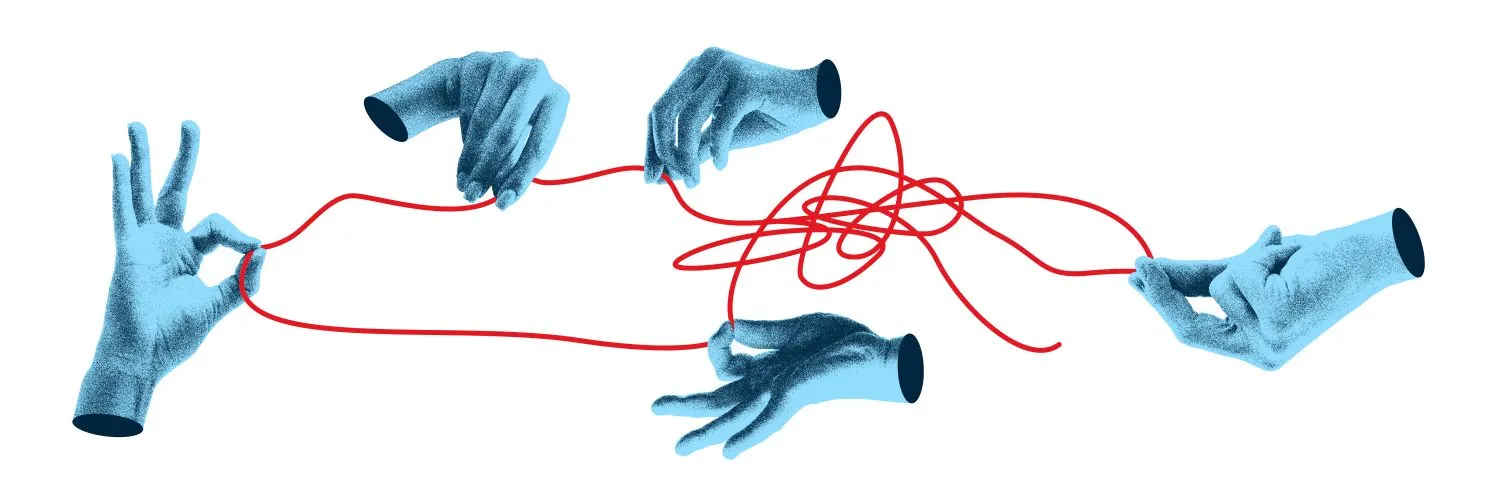
Without trust, uncertainty creates fear. Fear leads to rumours, disengagement, and resistance to change. Instead of focusing on solutions, teams spend energy protecting themselves. Leaders who build trust transform uncertainty into confidence and collaboration.
In leadership, trust is crucial
Trust is the foundation of collaboration, innovation, and resilience.
Research consistently shows that high-trust organisations outperform others in engagement, productivity, and adaptability. Stephen M.R. Covey, in The Speed of Trust, argues that trust is not a soft, intangible concept. It’s an economic driver. High-trust environments accelerate decision-making, reduce costs, and boost morale.
When trust is strong
- Teams communicate openly and solve problems faster.
- Employees feel safe to share ideas and take risks.
- Leaders can delegate confidently, reducing stress and bottlenecks.

Without trust, even the most talented teams struggle. Miscommunication, low morale, and disengagement become the norm.
Understanding trust: The research behind it
One of the most widely cited models of trust comes from Mayer, Davis, and Schoorman (1995), who define trust as the willingness to be vulnerable based on three factors
- Ability (competence)
- Benevolence (good intentions)
- Integrity (adherence to principles)
Building on this, the Trust Equation could be a practical tool for leaders:
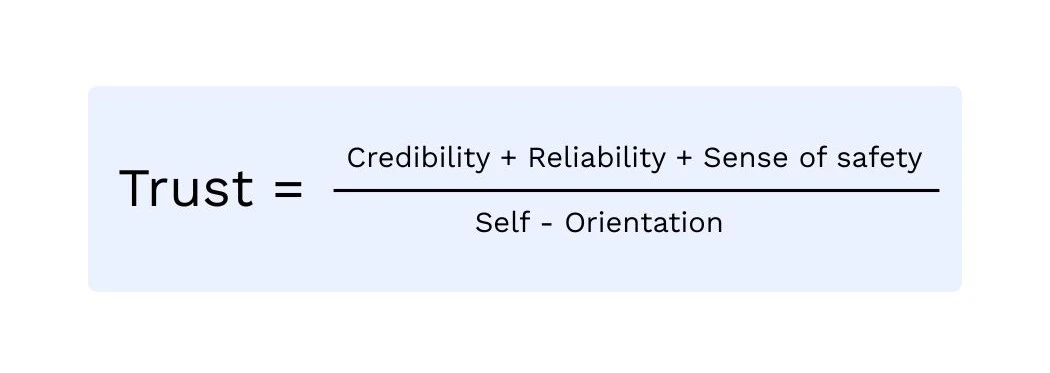
- Credibility: Do you demonstrate competence and honesty?
- Reliability: Do you consistently deliver on promises?
- Sense of safety: Do people feel safe sharing concerns with you?
- Self-Orientation: Are you focused on others’ success—or your own?
Leaders who score high on the first three elements and keep self-interest low build trust faster and more sustainably.

Voices shaping trust and leadership
Trust in leadership has been shaped by influential thinkers and practitioners across academia, organisational development, and public governance. Their work emphasises empathy, psychological safety, and vulnerability as essential components of trust.
Amy C. Edmondson – Psychological Safety
Harvard Business School professor Amy Edmondson introduced the concept of psychological safety, now considered critical for high-performing teams. Her research demonstrates that teams thrive when members feel safe to speak up without fear of embarrassment or punishment.
“When people feel safe, they share ideas, admit mistakes, and learn faster.”
Her book, The Fearless Organization, offers practical strategies for leaders to create environments where trust and learning go hand in hand.
Brené Brown – Vulnerability as Strength
Researcher and leadership expert Brené Brown reframes trust as something built through openness and courage, not perfection. In Dare to Lead, she argues that vulnerability is the birthplace of trust and innovation.
“Trust is earned in the smallest of moments.”
Her work reminds leaders that showing humanity—admitting uncertainty, listening deeply, and being authentic—strengthens trust far more than rigid control.
Jacinda Ardern – Empathetic Leadership in Action
Former Prime Minister of New Zealand Jacinda Ardern became a global example of empathetic leadership during crises such as the Christchurch tragedy and the COVID-19 pandemic. Her approach combined transparency with compassion, earning widespread trust from citizens and international observers.
“One of the criticisms I’ve faced over the years is that I’m not aggressive enough or assertive enough… But I refuse to believe that you cannot be both compassionate and strong.”
Her leadership demonstrates that trust is not just a management tool—it’s a societal value that shapes collective resilience.
Common leadership challenges around trust
Consider these real-world scenarios:
- Remote team and micromanagement: A manager sends daily check-ins to a dispersed team, hoping to regain control. Instead, the team feels mistrusted and disengaged.
- New leader and sudden changes: A leader joins a high-performing team and immediately imposes strict processes without consultation. The team feels their autonomy is under threat.
- Radical transparency: A manager shares every detail about company struggles, leaving some employees anxious and distracted.
- Public praise for one person: A leader repeatedly praises one team member, making others feel overlooked.
Each situation affects trust differently. The key is to recognise which part of the Trust Equation is at risk, and adjust behaviour accordingly.
Practical steps to build trust as a leader
1. Communicate openly, but wisely. Transparency builds trust, but oversharing creates uncertainty. Share what matters for decision-making.
2. Be consistent. Reliability means doing what you say, every time. Predictability reduces anxiety.
3. Show empathy. Listen actively and create psychological safety. Amy Edmondson’s research shows that teams perform better when members feel safe to speak up.
4. Keep self-interest in check. Framedecisions around team success, not personal gain. Servant leadership principles are powerful here.


